
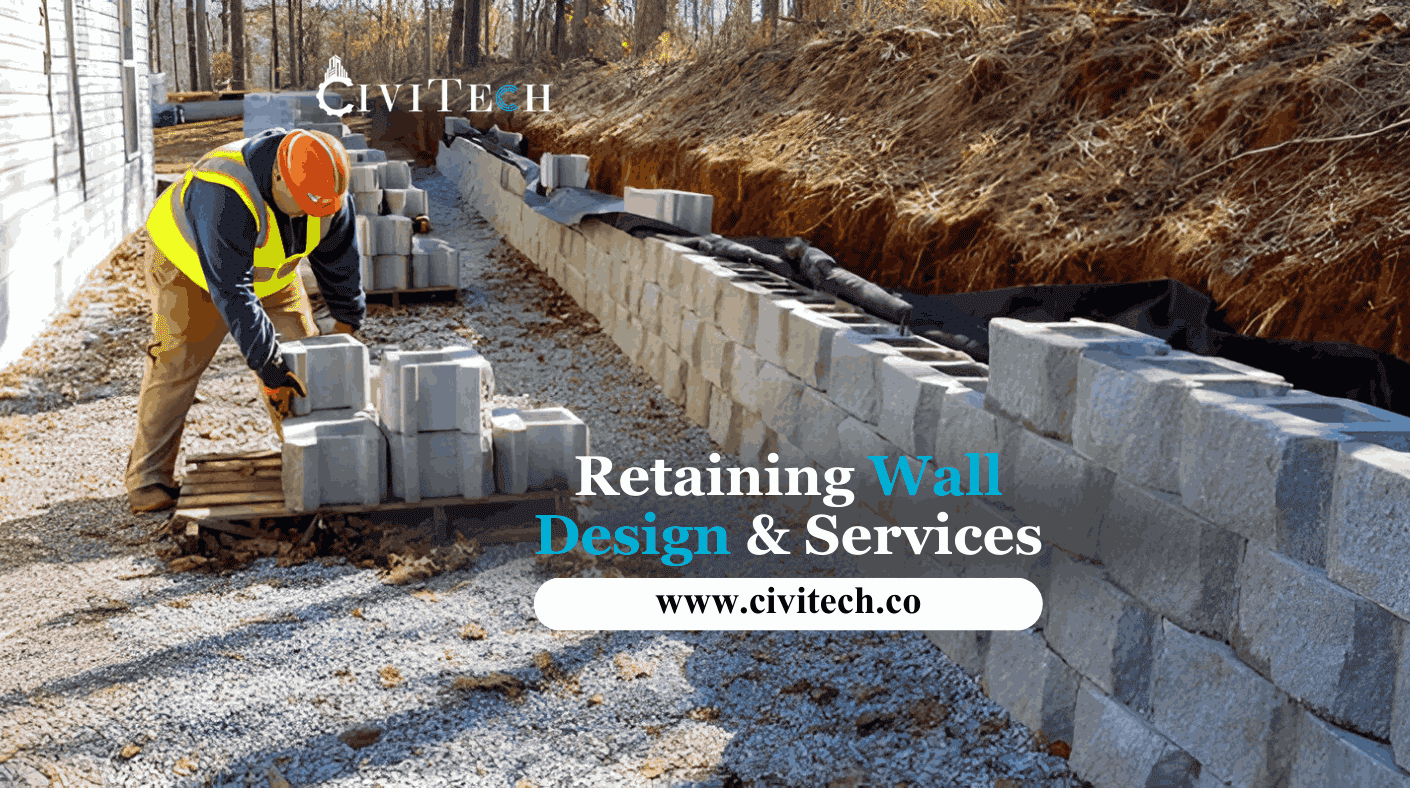
In modern infrastructure development and civil engineering, retaining walls are essential structural systems used to support soil and maintain ground stability. With rapid urbanization and the expansion of construction into sloped landscapes, retaining wall’s have become a crucial component of modern construction projects.
Cities around the world are increasingly facing terrain challenges, including slopes, hillsides, and uneven land surfaces. Retaining walls allow engineers and architects to transform these challenging landscapes into stable and functional spaces for buildings, roads, gardens, and infrastructure. A properly designed retaining wall not only prevents soil erosion but also protects structures from ground movement and improves the overall safety of construction projects. These walls are widely used in road construction, landscaping, basement structures, bridge abutments, and drainage systems.
Professional engineering companies like CiviTech play a vital role in the planning, design, and implementation of retaining wall’s. By combining geotechnical analysis, structural design principles, and modern engineering technologies, CiviTech ensures retaining walls perform safely and effectively over long periods.
Table of Contents
What Is a Retaining Wall in Civil Engineering
A retaining wall in civil engineering is a structural element designed to hold back soil or other materials and prevent them from moving downhill due to gravity. These walls are typically constructed in areas where there is a change in elevation or slope. Without retaining wall’s, soil can slide or collapse, leading to damage to nearby buildings, roads, and infrastructure. Retaining walls create a stable boundary that supports soil and prevents landslides or erosion.
They are commonly used in a wide range of engineering and construction projects, including:
- Highway embankments and road construction
- Basement and foundation support
- Bridge abutments
- Landscape architecture and terracing
- Flood control systems
- Railway infrastructure
- Commercial and residential developments
In professional engineering practice, the design of retaining wall’s involves detailed calculations related to soil pressure, drainage, foundation strength, and structural stability. Engineering firms such as CiviTech specialize in designing retaining walls using modern structural software, ensuring that each project meets safety standards and long-term durability requirements.
What Is the Purpose of a Retaining Wall
Retaining wall’s serve several important purposes in construction and landscape development. While their primary function is to retain soil, they also contribute to structural stability, land development, and environmental protection.
The key purposes of retaining walls include:
- Preventing soil erosion and landslides
- Stabilizing slopes and embankments
- Creating usable land on uneven terrain
- Supporting foundations and structures
- Controlling water drainage and runoff
- Improving landscape design and aesthetics
- Protecting roads, bridges, and infrastructure
In urban construction projects, retaining walls help engineers maximize land usage by converting steep slopes into buildable and functional spaces.
How Do Retaining Walls Work
Retaining wall’s function by resisting the lateral pressure exerted by soil behind the wall. Soil naturally tends to move downward due to gravity, and when slopes are steep or soil is loose, the risk of collapse increases. A retaining wall works by counterbalancing this pressure using its structural strength and foundation stability.
Several forces are considered in retaining wall design:
- Active earth pressure from soil
- Passive resistance in front of the wall
- Weight of the retaining wall structure
- Water pressure due to poor drainage
- External loads from nearby structures
Proper engineering design ensures the wall remains stable against common structural failures such as sliding, overturning, or foundation settlement.
mportance of Retaining Walls in Construction and Landscaping
Retaining wall’s are critical for maintaining the safety and stability of construction projects. They help prevent soil movement and ensure that slopes remain secure even during heavy rainfall or seismic activity. These walls are also widely used in landscaping to create terraced gardens, decorative boundaries, and functional outdoor spaces.
Some of the major advantages of retaining walls include:
- Stabilizing steep slopes and hillsides
- Preventing soil erosion during storms
- Creating multi-level landscape designs
- Protecting property foundations
- Improving drainage and water management
- Increasing land usability in hilly areas
With professional engineering input from firms such as CiviTech, retaining walls can be designed to provide both structural reliability and architectural appeal.
Different Types of Retaining Walls Used in Construction

Several types of retaining walls are used in civil engineering depending on soil conditions, load requirements, and construction costs.
The most commonly used retaining wall types include:
- Gravity retaining wall’s
- Cantilever retaining wall’s
- Counterfort retaining wall
- Sheet pile retaining wall
- Anchored retaining wall’s
- Reinforced soil retaining wall’s
Each type has specific advantages and is suitable for particular construction scenarios.
Gravity Retaining Walls and Their Applications
Gravity retaining walls rely on their own weight to resist the pressure of soil behind them. Because they depend primarily on mass, these walls are often constructed using heavy materials such as concrete, stone, or masonry blocks. Gravity retaining wall’s are ideal for smaller projects and lower heights where heavy reinforcement is not required.
Typical applications include:
- Residential landscaping projects
- Small slope stabilization
- Garden retaining structures
- Boundary wall systems
- Low highway embankments
Although gravity walls are simple to construct, they require a wide base and significant material volume.
Cantilever Retaining Walls in Structural Engineering
Cantilever retaining walls are among the most commonly used retaining wall systems in modern construction. These walls consist of a reinforced concrete vertical wall connected to a base slab. The base slab has two main components:
- Heel (located beneath retained soil)
- Toe (located in front of the wall)
The weight of the soil resting on the heel helps stabilize the wall against overturning. Cantilever retaining walls are suitable for medium-height retaining structures and are widely used in:
- Highway engineering
- Residential construction
- Commercial developments
- Basement support systems
Engineering companies like CiviTech design cantilever retaining walls using advanced modeling software to ensure maximum efficiency and structural safety.
Counterfort Retaining Walls for Large Structures
Counterfort retaining walls are used for tall retaining structures where cantilever walls become inefficient. These walls include triangular supports called counterforts that connect the wall to the base slab. Counterforts reduce bending stress and improve overall stability.
Common uses of counterfort retaining walls include:
- Industrial construction projects
- High embankments
- Bridge abutments
- Large infrastructure developments
Although they require more complex construction, counterfort walls are highly efficient for large retaining heights.
Sheet Pile Retaining Walls for Soil Retention
Sheet pile retaining walls are constructed by driving thin interlocking sheets of steel, vinyl, or timber into the ground. These walls are particularly useful in soft soil conditions or areas where excavation space is limited.
Sheet pile retaining walls are commonly used in:
- Riverbank stabilization
- Coastal construction projects
- Underground parking structures
- Temporary excavation support
Their ability to form a continuous barrier makes them effective in controlling both soil and water movement.
Anchored Retaining Walls for Deep Excavations
Anchored retaining walls provide additional support by using anchors or tiebacks embedded into stable soil layers behind the wall. These anchors help distribute the load and increase the wall’s resistance against soil pressure.
Anchored retaining walls are commonly used in:
- Deep basement excavations
- Tunnel construction
- High retaining wall structures
- Urban infrastructure projects
Modern engineering firms like CiviTech use advanced soil anchoring techniques to ensure safe and stable excavation in dense urban environments.
Reinforced Soil Retaining Walls and Geogrid Technology
Reinforced soil retaining walls use geosynthetic materials such as geogrids to strengthen soil layers and improve structural stability. Geogrids act as reinforcement within the soil, increasing tensile strength and preventing soil movement. These walls are widely used in infrastructure projects such as highways, railways, and bridge abutments.
Advantages of geogrid reinforced retaining walls include:
- Lower construction costs compared to concrete walls
- Faster construction process
- Improved load distribution
- Increased flexibility and durability
- Reduced environmental impact
Engineering teams at CiviTech incorporate geogrid technology in modern retaining wall designs to improve efficiency and sustainability.
Materials Used in Retaining Wall Construction
The selection of materials for retaining wall construction depends on the project requirements, soil conditions, and design specifications. Common materials used in retaining wall construction include:
- Reinforced concrete
- Stone masonry
- Brick masonry
- Steel sheet piles
- Timber structures
- Geosynthetic reinforcement materials
Each material offers different benefits in terms of strength, durability, cost, and aesthetic appeal.
Key Design Principles for Retaining Walls
Designing a retaining wall requires careful consideration of structural and geotechnical factors. Engineers must ensure that the wall remains stable under all conditions. Important design principles include:
- Stability against sliding and overturning
- Adequate foundation bearing capacity
- Proper wall reinforcement design
- Soil pressure analysis
- Effective drainage systems
- Consideration of seismic forces
Engineering firms follow international design standards and advanced simulation tools to ensure retaining walls meet safety and performance requirements.
Drainage Systems and Soil Stability in Retaining Wall Design
Drainage is one of the most critical aspects of retaining wall performance. Without proper drainage, water can accumulate behind the wall and increase hydrostatic pressure. To prevent this problem, engineers include drainage systems such as:
- Weep holes in the wall structure
- Gravel drainage layers
- Perforated drainage pipes
- Filter fabrics for soil separation
These systems allow water to escape while maintaining soil stability. Professional retaining wall designs by CiviTech always incorporate advanced drainage planning to ensure long-term structural performance.
Common Problems and Failures in Retaining Walls
Despite their strength, retaining walls can fail if they are poorly designed or constructed. Common retaining wall failures include:
- Wall overturning due to excessive soil pressure
- Sliding caused by weak foundation support
- Structural cracking from inadequate reinforcement
- Water pressure buildup due to poor drainage
- Soil erosion behind the wall
Proper engineering design and construction supervision help prevent these problems.
Choosing the Right Retaining Wall for Your Project
Selecting the correct retaining wall type requires a detailed evaluation of site conditions and project requirements. Factors to consider include:
- Height of the retaining wall
- Soil properties and stability
- Available construction space
- Drainage conditions
- Budget and material availability
- Long-term maintenance requirements
Consulting experienced engineers such as the team at CiviTech ensures the most suitable retaining wall solution for your project.
Retaining Wall Construction Process Step by Step
The construction of retaining walls follows a systematic process to ensure safety and durability. Typical construction steps include:
- Site inspection and soil investigation
- Engineering design and structural calculations
- Excavation and foundation preparation
- Installation of reinforcement materials
- Concrete pouring or wall assembly
- Drainage system installation
- Backfilling and soil compaction
Each stage requires careful monitoring to maintain structural integrity.
Designing Retaining Walls with Expertise from CiviTech
CiviTech provides professional retaining wall design and consulting services for residential, commercial, and infrastructure projects. Their engineering team specializes in:
- Geotechnical analysis and soil testing
- Structural design and load calculations
- Advanced retaining wall modeling
- Construction supervision and quality assurance
By integrating engineering expertise with modern construction technologies, CiviTech delivers retaining wall solutions that meet international standards and ensure long-term safety.
Modern Retaining Wall Solutions and Engineering Innovations
The field of retaining wall engineering has evolved significantly with the introduction of new materials and technologies. Modern innovations include:
- Geogrid reinforced soil systems
- Modular retaining wall blocks
- Smart drainage solutions
- Sustainable landscape retaining walls
- Computer-based structural modeling
These advancements allow engineers to design retaining walls that are stronger, more cost-efficient, and environmentally sustainable.
Conclusion
Retaining walls are essential structures in modern civil engineering and landscape development. They provide soil stability, prevent erosion, and create usable land in areas with uneven terrain. From gravity walls to advanced geogrid reinforced systems, each retaining wall type serves a specific purpose depending on project requirements.
However, proper design, drainage planning, and construction quality are crucial to ensure long-term performance and safety. Professional engineering firms like CiviTech offer expert retaining wall design services, combining geotechnical knowledge, structural engineering, and modern technologies to deliver safe and efficient construction solutions.
FAQs
-
What is the main purpose of a retaining wall?
The main purpose of a retaining wall is to hold back soil and prevent erosion or landslides in areas with uneven ground elevation.
-
What are the most common types of retaining walls?
The most common types include gravity retaining walls, cantilever retaining walls, sheet pile retaining walls, anchored retaining walls, and reinforced soil retaining walls.
-
What materials are used for retaining walls?
Retaining walls are commonly built using reinforced concrete, stone masonry, steel sheet piles, timber, and geosynthetic materials.
-
How long do retaining walls last?
Well-designed retaining walls can last between 50 and 100 years, depending on materials, drainage systems, and maintenance.