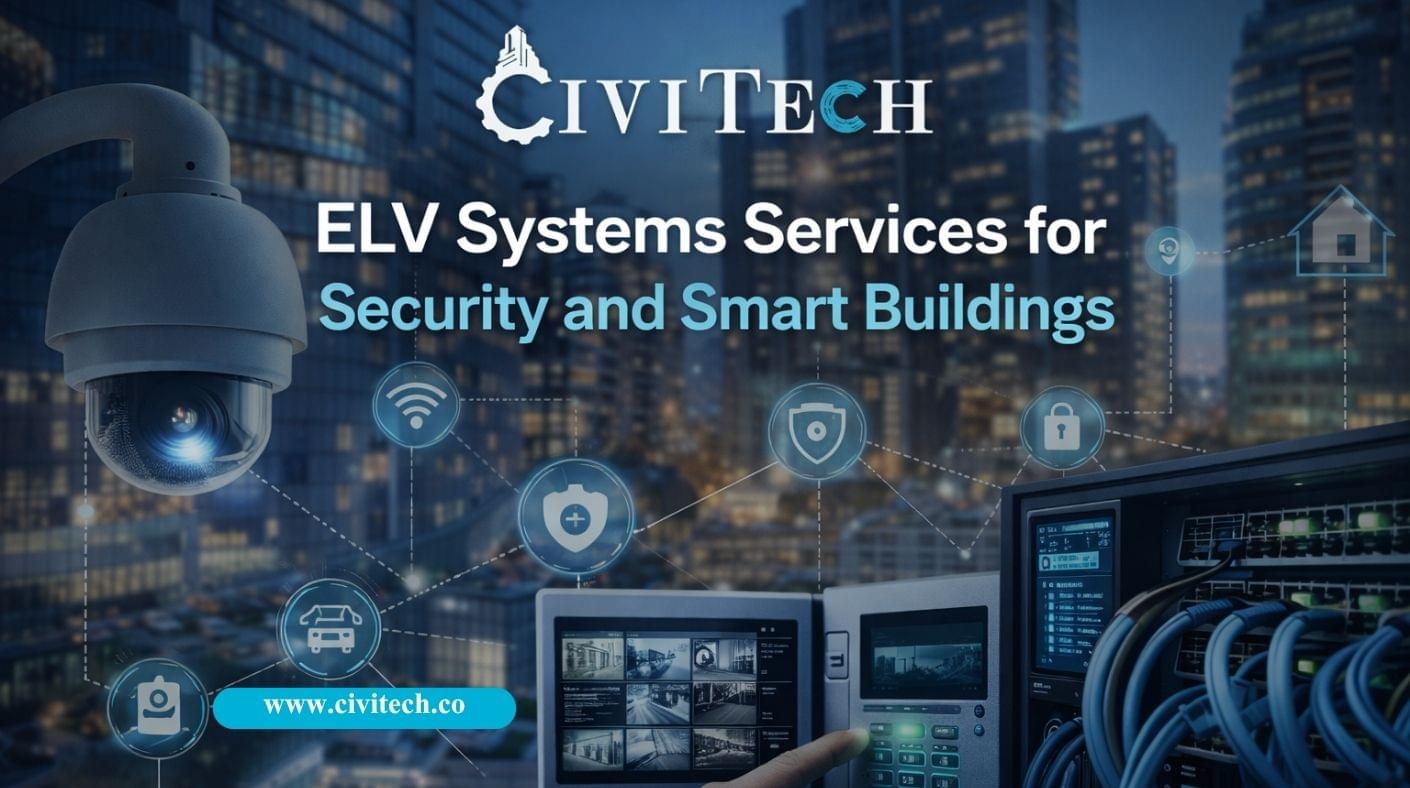
Extra Low Voltage (ELV) systems services are becoming essential for modern infrastructure, particularly in smart buildings and high-security environments. These systems enable automation, safety monitoring, and communication across commercial and residential facilities. Organizations now rely on integrated technology solutions that enhance operational efficiency and security.
If you need ELV Services From CiviTech then Click Here.
ELV systems operate using low voltage but provide powerful capabilities. They include CCTV surveillance, access control, fire alarms, structured cabling, public address systems, and intercom solutions. These technologies work together to create a connected smart building environment.
Why ELV are important in modern buildings:
- Enhanced security monitoring
- Smart automation capabilities
- Centralized building management
- Improved communication infrastructure
- Scalable technology solutions
Table of Contents
What Are ELV Systems? Complete Overview
ELV systems refer to Extra Low Voltage systems that operate at voltages lower than standard electrical systems. These technologies are used for communication, safety, and automation rather than heavy power applications. ELV systems include data networks, security solutions, and building management systems.
Extra Low Voltage systems generally operate below 50 volts AC or 120 volts DC. This makes them safer to install and maintain compared to traditional electrical systems. ELV technologies are designed to handle data transfer, monitoring, and communication across a building or facility.
Types of ELV technologies include CCTV surveillance systems, access control systems, structured cabling, video intercoms, fire detection systems, and building management systems. Each component plays a critical role in creating a connected infrastructure.
Core Components of ELV Systems

3.1 CCTV Surveillance Systems
CCTV surveillance systems are among the most common ELV components. These cameras monitor activities in real-time and record footage for security analysis. Modern IP-based CCTV systems allow remote viewing through mobile devices. Businesses use CCTV for theft prevention, employee monitoring, and operational safety.
3.2 Access Control Systems
Access control systems regulate entry into restricted areas. These systems use biometric readers, RFID cards, or PIN codes. Access control enhances building security and prevents unauthorized entry. Integration with attendance systems also improves workforce management.
3.3 Fire Alarm & Detection Systems
Fire detection systems are essential for safety compliance. Smoke detectors, heat sensors, and alarm panels detect fire hazards early. These systems automatically alert occupants and emergency teams. Integration with building management systems improves response time.
3.4 Structured Cabling Systems
Structured cabling forms the backbone of communication networks. It supports data transfer, internet connectivity, and telephone communication. Proper cabling ensures scalability and performance. Businesses rely on structured cabling for IT infrastructure.
3.5 Public Address Systems
Public address systems enable communication across large facilities. They are used in airports, schools, offices, and malls. PA systems deliver announcements, emergency alerts, and operational instructions.
3.6 Video Intercom Systems
Video intercom systems allow communication between entrances and internal users. These systems improve visitor verification and security. Smart intercom solutions also integrate with mobile applications.
Benefits of ELV Systems for Smart Buildings
ELV systems offer numerous benefits for smart buildings. One of the biggest advantages is enhanced security. CCTV cameras, access control, and intrusion detection systems protect assets and occupants. Improved communication is another benefit. Public address systems and intercoms enable quick information sharing. This improves operational efficiency and emergency response.
Major benefits of ELV systems:
- Enhanced building security
- Improved internal communication
- Energy-efficient automation
- Centralized monitoring control
- Scalable infrastructure growth
These benefits make ELV solutions ideal for modern commercial and residential developments.
ELV Systems for Security and Surveillance
ELV systems play a critical role in security and surveillance. CCTV integration enables continuous monitoring. Businesses can view live footage and recorded video. This improves security and incident investigation.
Access control automation restricts entry to authorized personnel. Integration with CCTV provides visual verification. This enhances building safety. Intrusion detection systems alert security teams about unauthorized access. Motion sensors and alarm panels improve response time.
Security features provided by ELV systems:
- Real-time CCTV monitoring
- Biometric access control
- Intrusion detection alarms
- Remote surveillance access
- Visitor management systems
These features enhance building security and reduce risks.
ELV Systems for Commercial and Residential Buildings
ELV systems are widely used in offices and commercial spaces. These systems manage surveillance, communication, and IT networks. Businesses rely on ELV infrastructure for smooth operations.
Residential smart homes also benefit from ELV technologies. Video intercoms, smart security systems, and automation enhance convenience and safety. Homeowners can monitor their property remotely. Industrial facilities use ELV systems for safety monitoring. Fire detection, CCTV, and access control ensure secure operations.
Buildings that use ELV systems:
- Corporate office buildings
- Residential smart homes
- Industrial manufacturing facilities
- Educational institutions
- Hospitals and healthcare centers
Each building type requires customized ELV solutions.
ELV Design and Installation Process
The ELV installation process begins with a site survey. Engineers assess building requirements and layout. This helps determine system specifications. System design follows the survey. Engineers create network diagrams and integration plans. Proper design ensures efficient implementation.
Equipment selection is based on project needs. Quality devices improve performance and reliability. Installation involves cabling, mounting devices, and configuring systems. Professional installation ensures optimal performance.
ELV installation steps:
- Site survey and requirement analysis
- System design and planning
- Equipment selection and procurement
- Installation and configuration
- Testing and commissioning
Professional ELV installation ensures reliability and performance.
CiviTech Expertise in ELV Systems
CiviTech delivers advanced ELV systems services for smart buildings and security infrastructure. The company provides end-to-end solutions, including design, installation, and maintenance. CiviTech has experience in smart building solutions across commercial and residential projects. Their engineering team specializes in integrating multiple ELV technologies.
Advanced security system integration ensures seamless communication between CCTV, access control, and fire alarms. This improves monitoring efficiency. Customized ELV design solutions help clients meet unique requirements. Each project is tailored to building size and functionality.
Why CiviTech stands out:
- Experienced engineering professionals
- Customized ELV system designs
- Advanced security integrations
- Compliance with global standards
- Reliable maintenance support
Why Choose Professional ELV Systems Services
Professional ELV services ensure proper system integration. Certified engineers design reliable infrastructure. Quality equipment improves performance and durability. Professional installers select trusted brands.
Proper system integration allows centralized control. This improves efficiency and security. Long-term reliability reduces maintenance costs. Professional services ensure smooth operations.
Advantages of hiring professionals:
- Certified installation engineers
- High-quality equipment usage
- Proper system integration
- Reduced maintenance issues
- Long-term system reliability
Latest Trends in ELV Systems Technology
AI surveillance systems are transforming security. Intelligent cameras detect suspicious activity automatically. Cloud-based access control allows remote management. Administrators can control access from mobile devices.
Smart IoT integration connects multiple building systems. This improves automation and efficiency. Remote building management enables centralized monitoring. Facility managers can oversee operations from anywhere.
Modern ELV technology trends:
- AI-powered surveillance cameras
- Cloud-based access control
- Smart IoT device integration
- Remote building monitoring
- Mobile-based system management
Cost Factors in ELV Systems Installation
Building size affects system requirements. Larger facilities need more devices. Equipment type impacts cost. Advanced cameras and sensors increase investment.
Integration complexity also influences pricing. Multi-system integration requires additional configuration. Maintenance requirements should be considered. Regular servicing ensures long-term performance.
Factors affecting ELV cost:
- Building size and layout
- Type of equipment selected
- Integration complexity level
- Installation labor requirements
- Maintenance and support plans
GEO-Based ELV Services Demand
ELV systems demand is growing rapidly in Lahore due to commercial construction and smart housing projects. Smart building adoption in Islamabad is increasing. Developers prioritize automation and security.
Commercial ELV solutions are widely used in Karachi for offices, malls, and industrial facilities.
Growing ELV market in Pakistan:
- Smart housing projects expansion
- Commercial building security demand
- Industrial automation adoption
- Educational campus safety requirements
- Government infrastructure development
Conclusion
ELV systems services are essential for security and smart building functionality. These technologies provide surveillance, communication, and automation. Businesses and residential communities benefit from improved safety and operational efficiency. Professional ELV installation ensures reliable performance and scalability. With increasing demand in Pakistan, organizations should invest in modern ELV solutions to stay competitive.
FAQs
-
What are ELV systems used for?
ELV systems are used for security, communication, and automation in buildings.
-
Are ELV systems necessary for smart buildings?
Yes, ELV systems provide the backbone for smart building infrastructure.
-
What is included in ELV services?
CCTV, access control, fire alarm, structured cabling, and intercom systems.
-
How much does ELV installation cost?
Cost depends on building size, equipment, and integration complexity.
-
Why hire professional ELV installers?
Professional installers ensure reliable performance and proper integration.