Boundary walls play a crucial role in defining, protecting, and enhancing the value of a property. A well-designed boundary wall is not just a physical barrier but also a structural element that contributes to safety, privacy, and aesthetics. In modern construction projects, boundary wall design has evolved beyond simple brick walls into sophisticated structures incorporating reinforced materials, decorative finishes, and integrated security technologies.
Read More: If You Need Wall Deesigning Services Or Any Inquiry about Wall Designing then Contact CiviTech.co Team.
Whether for residential homes, farmhouses, commercial buildings, or industrial sites, boundary walls create the first line of defense against unauthorized access. Property owners today seek solutions that balance durability, cost efficiency, visual appeal, and security. This has led to the adoption of modern materials like reinforced concrete panels, precast systems, and metal fencing combinations.
Professional engineering and planning are essential when designing boundary walls because factors such as soil conditions, height regulations, structural stability, and environmental exposure directly affect performance. A properly designed boundary wall not only secures the property but also enhances its architectural character.
Table of Contents
Importance of Boundary Walls for Property Security and Privacy
Boundary walls provide a clear separation between private and public space. One of their primary functions is preventing unauthorized entry while maintaining privacy for property owners. Security is the most important reason why boundary walls are constructed. Without a strong perimeter barrier, properties remain vulnerable to trespassing, theft, and vandalism. A properly constructed wall can discourage intruders and reduce the risk of security incidents.
Privacy is another major advantage. In densely populated neighborhoods, boundary walls protect residents from outside visibility. This is particularly important for residential homes, farmhouses, and luxury villas where homeowners value personal space. Boundary walls also contribute to safety. They prevent stray animals, unauthorized vehicles, and unwanted visitors from entering the property. For commercial properties such as warehouses, factories, and office complexes, boundary walls protect valuable assets and infrastructure.
Key Factors to Consider Before Designing a Boundary Wall
Designing a boundary wall requires careful planning and technical evaluation. Several factors influence the durability, functionality, and cost of the structure.
The first factor is purpose. Some boundary walls are designed primarily for security, while others focus on privacy or aesthetics. High-security areas require stronger materials such as reinforced concrete or steel.
The height and thickness of the wall are also important considerations. Taller walls provide better security but may require stronger foundations to ensure structural stability.
Soil conditions play a crucial role in the design process. Weak or loose soil may require deeper foundations to prevent wall settlement or collapse.
Another factor is local building regulations. Municipal authorities often have guidelines regarding maximum boundary wall height and construction standards.
Material selection significantly affects durability and cost. Common materials include brick masonry, concrete panels, stone, steel fencing, and precast concrete systems.
Weather conditions must also be considered. Areas with heavy rainfall, extreme heat, or high winds require stronger construction techniques and weather-resistant materials.
Finally, budget planning determines the type of materials and design features that can be included in the boundary wall project.
Popular Boundary Wall Design Ideas for Modern Properties
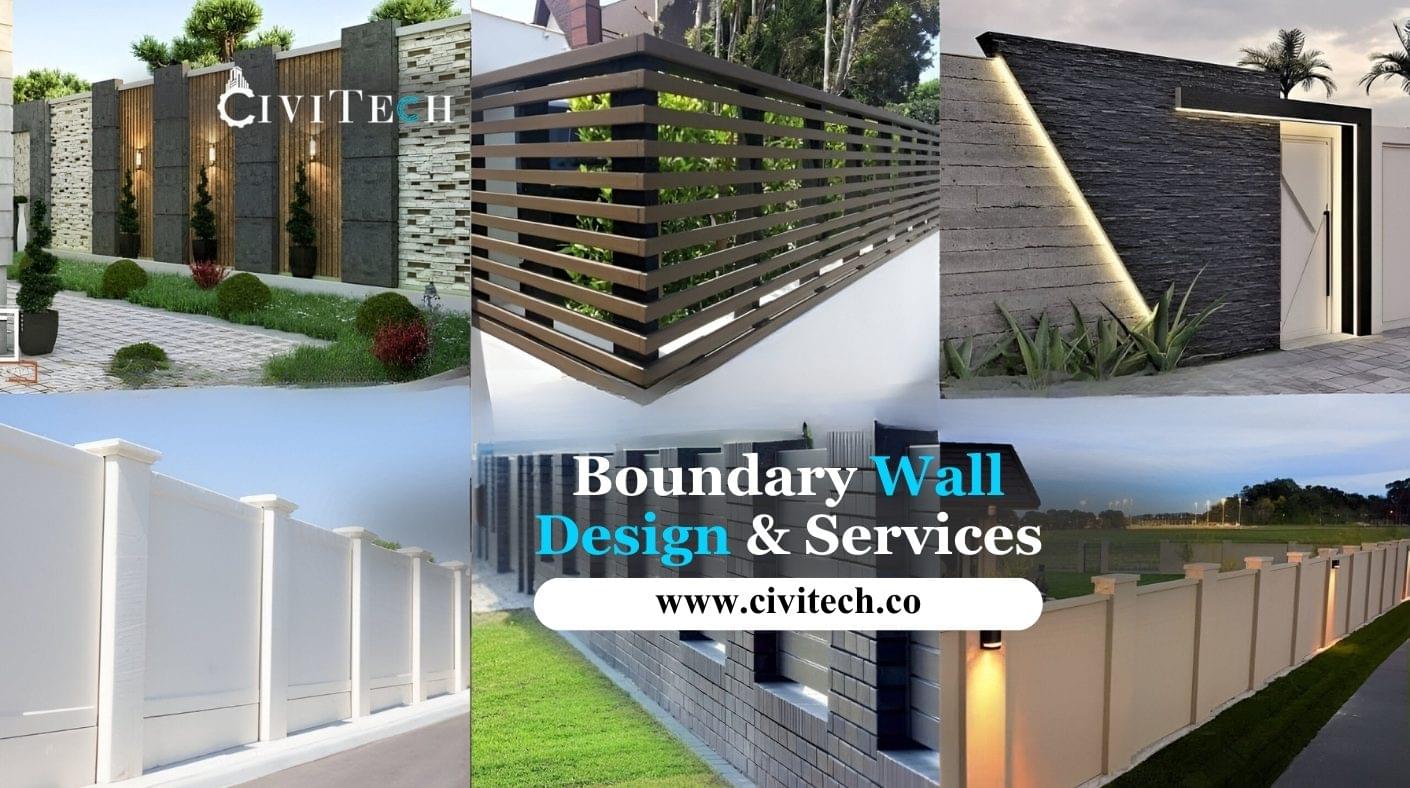
Modern boundary wall designs combine security with architectural appeal. Property owners now prefer stylish and functional wall designs that enhance the visual value of their properties.
One popular approach is combining brick masonry with metal fencing. This design provides security while allowing airflow and visibility.
Another modern design includes decorative concrete panels with geometric patterns. These panels offer durability while giving the boundary wall a contemporary look.
Stone cladding is also widely used for luxury homes and farmhouses. Natural stone textures create an elegant appearance while maintaining structural strength.
Glass panel sections are becoming popular in commercial properties. Tempered glass combined with steel frames creates a modern and professional aesthetic.
Some homeowners prefer green boundary walls with vertical gardens. This eco-friendly design improves air quality and adds natural beauty to the property.
Lighting elements can also be integrated into boundary walls. LED lights installed along the top or base of the wall improve nighttime security and enhance the property’s appearance.
Types of Boundary Walls Used in Residential and Commercial Projects
Different types of boundary walls are used depending on the property type and security requirements.
- Brick boundary walls
- Reinforced concrete boundary walls
- Precast concrete walls
- Stone boundary walls
- Metal fencing walls
Each type has its own advantages in terms of cost, durability, maintenance, and installation time.
RCC Boundary Wall Design for High-Security Properties
Reinforced Cement Concrete boundary walls are widely used where maximum security is required. These walls are designed using steel reinforcement bars embedded within concrete to provide exceptional strength and resistance. RCC boundary walls are capable of withstanding heavy loads, harsh weather conditions, and potential impact forces. They are commonly used in factories, warehouses, government facilities, and high-value residential properties.
The construction process involves building strong foundations, installing steel reinforcement cages, and pouring concrete into formwork. Proper curing ensures the wall achieves its designed strength. RCC walls can also include additional security elements such as razor wire, electric fencing, and surveillance systems. Their durability makes them a long-term investment for property owners seeking maximum security.
Brick Boundary Wall Construction for Residential Buildings
Brick boundary walls remain one of the most widely used solutions for residential properties. Brick masonry provides good strength, affordability, and flexibility in design. Bricks are laid using cement mortar in horizontal layers to create a solid structure. Proper alignment and bonding patterns ensure structural stability.
One of the advantages of brick walls is the ability to customize the design. Homeowners can add decorative plaster, paint finishes, or stone cladding to enhance visual appeal. Brick boundary walls also provide good insulation and sound reduction, making them suitable for urban residential areas.
Regular maintenance such as plaster repair and repainting helps maintain their durability over time.
Precast Boundary Wall Systems for Fast Construction
Precast boundary wall systems are becoming increasingly popular in modern construction. These walls are manufactured in factories and transported to the construction site for installation. The main advantage of precast systems is speed of construction. Large sections of the wall can be installed within a short period, reducing labor costs and project timelines.
Precast walls are also manufactured under controlled conditions, ensuring consistent quality and strength. These systems are commonly used for industrial sites, housing societies, agricultural farms, and large commercial developments. Another advantage is modular design. Panels can be replaced or expanded easily if property boundaries change in the future.
Modern Materials Used in Boundary Wall Construction
Advancements in construction technology have introduced new materials for boundary wall construction.
Common modern materials include:
- Reinforced concrete panels
- Hollow concrete blocks
- Steel fencing systems
- Aluminum panels
- Composite panels
- Natural stone cladding
These materials offer better durability, lower maintenance, and improved aesthetic options compared to traditional brick walls. Some materials are also resistant to corrosion, termites, and moisture, making them suitable for long-term outdoor use.
Standard Boundary Wall Height and Thickness for Safety
Boundary wall height and thickness vary depending on the purpose and local regulations. For residential properties, boundary walls typically range between 5 to 7 feet in height. Commercial and industrial properties may require walls between 8 to 12 feet for enhanced security.
Wall thickness also affects structural stability. Standard brick boundary walls are usually 9 inches thick, while reinforced concrete walls may vary depending on design loads. Proper foundation depth is also important to prevent wall tilting or collapse, especially in areas with soft soil.
Security Features to Include in Boundary Wall Design
Modern boundary wall designs often incorporate additional security features to improve protection.
Common security enhancements include:
- Barbed wire or razor wire
- Electric fencing systems
- Motion sensor lighting
- CCTV camera installation points
- Anti-climb wall surfaces
- Security gates with access control
These features significantly increase the effectiveness of boundary walls in preventing unauthorized access.
Boundary Wall Design for Houses, Farmhouses and Commercial Properties
Different property types require different boundary wall designs.
Residential houses typically require medium-height walls with decorative finishes. Privacy and aesthetic appeal are often prioritized. Farmhouses usually require larger boundary walls covering extensive land areas. Durable materials and cost-effective designs are preferred.
Commercial properties focus heavily on security. These walls often include reinforced structures, security lighting, and surveillance systems. Industrial sites may require heavy-duty RCC walls capable of protecting valuable equipment and infrastructure.
Cost Factors in Boundary Wall Construction Projects
The cost of constructing a boundary wall depends on multiple factors.
Key cost factors include:
- Material selection
- Wall height and thickness
- Foundation depth
- Labor costs
- Security features
- Decorative finishes
- Site accessibility
Precast systems may reduce labor costs but involve higher material and transportation expenses. Careful planning and budgeting help property owners select the most suitable design without exceeding project costs.
Common Mistakes to Avoid in Boundary Wall Construction
Many boundary wall failures occur due to poor planning or construction errors.
Common mistakes include:
- Weak foundations
- Low-quality materials
- Incorrect wall thickness
- Ignoring soil conditions
- Poor drainage planning
- Lack of structural reinforcement
Avoiding these mistakes ensures that the boundary wall remains strong and durable for many years.
Sustainable and Eco-Friendly Boundary Wall Design Ideas
Sustainable construction practices are becoming increasingly important in modern property development.
Eco-friendly boundary wall ideas include:
- Recycled concrete panels
- Bamboo fencing sections
- Green walls with plants
- Solar-powered security lighting
- Permeable wall designs for water drainage
These solutions reduce environmental impact while maintaining security and functionality.
CiviTech Expertise in Boundary Wall Design and Construction
Professional engineering expertise plays a crucial role in boundary wall construction. Companies with experience in civil engineering and construction management can design walls that meet structural, aesthetic, and security requirements.
CiviTech specializes in planning and executing boundary wall projects for residential, commercial, and industrial properties. Their team evaluates soil conditions, security requirements, and architectural design to develop customized solutions.
From brick masonry walls to advanced precast systems, professional construction services ensure high-quality workmanship and long-lasting results.
Why Choose CiviTech for Secure Boundary Wall Projects
Selecting the right construction partner is essential for achieving reliable and durable boundary walls.
CiviTech offers several advantages:
- Experienced civil engineers
- Modern construction techniques
- Quality materials
- Customized design solutions
- Efficient project management
These strengths enable property owners to build secure and visually appealing boundary walls that add long-term value to their properties.
Future Trends in Boundary Wall Design and Smart Security
Technology is transforming boundary wall design. Future boundary walls will integrate advanced security systems and smart monitoring technologies.
Smart boundary walls may include:
- AI-powered surveillance cameras
- Smart access control gates
- Motion detection sensors
- Integrated alarm systems
- Solar-powered security features
These technologies will improve property security while reducing maintenance and operational costs.
Conclusion: Choosing the Right Boundary Wall for Secure Properties
Boundary walls are an essential component of property development. They provide security, privacy, and aesthetic value while defining property boundaries.
Modern boundary wall designs combine strong construction materials with advanced security features. From brick masonry to reinforced concrete and precast systems, property owners have many options depending on their needs and budget.
Careful planning, professional engineering, and high-quality construction ensure that boundary walls remain durable and effective for many years. Investing in the right boundary wall design is not just about protection; it is about creating a secure and well-defined environment that enhances the overall value of the property.
FAQs
-
What is the best boundary wall for security
Reinforced concrete boundary walls provide the highest level of security due to their strength and durability.
-
What is the standard boundary wall height?
Residential boundary walls typically range from 5 to 7 feet, while commercial walls may reach 8 to 12 feet.
-
Which material is best for boundary wall construction?
Common materials include brick masonry, reinforced concrete, and precast panels depending on security and budget requirements.
-
How much does boundary wall construction cost?
Costs vary depending on materials, height, foundation requirements, and security features.
-
Are precast boundary walls durable?
Yes, precast boundary walls are manufactured under controlled conditions, ensuring consistent strength and durability.